Home of real teaching & learning
- Full support for teachers
- Focus on critical thinking
- Engaging classroom activities
- Integrated student eBook
- Assessed tasks / qBank
- Practice exam questions
The InThinking Guarantee: Our sites are written by expert practitioners and not by AI
See our AI policyDisclaimer: InThinking subject sites are neither endorsed by nor connected with the International Baccalaureate Organisation.
Don't miss out, find out!
- Free trials Take out a one month free trial today!
- Newsletters Subscribe to our FREE subject site newsletters.
Recommendations
Read what users are saying about the site.Site authors


IB Approved Workshops
Chemistry
IB DP Category 2
Barcelona, Spain, 12 - 14 February 2027
Find out more
Chemistry: A focus on the experimental programme
IB DP Category 3
Paris, France, 19 - 21 February 2027
Find out moreVirtual Think-Ins
Focus On: IB Teaching – A Practical Guide for Teachers new to the IB
20 November 2026
Find out moreInThinking Shorts
Getting the most out of InThinking Subject Sites
12 October 2026
Find out more
Getting the most out of InThinking Subject Sites
15 October 2026
Find out more
Chemistry: Getting the most out of the site
4 November 2026
Find out more
Find all InThinking events at
inthinking.net
Quote of the day
If it is good to teach students about the chemical industry then why is it not good to assign ethical qualities to substances along with their physical and chemical ones? We might for instance say that CS gas is a bad chemical because it can only ever be used by a few people with something to protect against many people with nothing to lose. Penicillin is a good chemical.
.png)
InThinking
Supporting international schools with high quality PD & interactive online resources
Dynamic
Creative
Personal
Creative
Personal

Selected student pages
See all
Most popular
See all


Blog
Free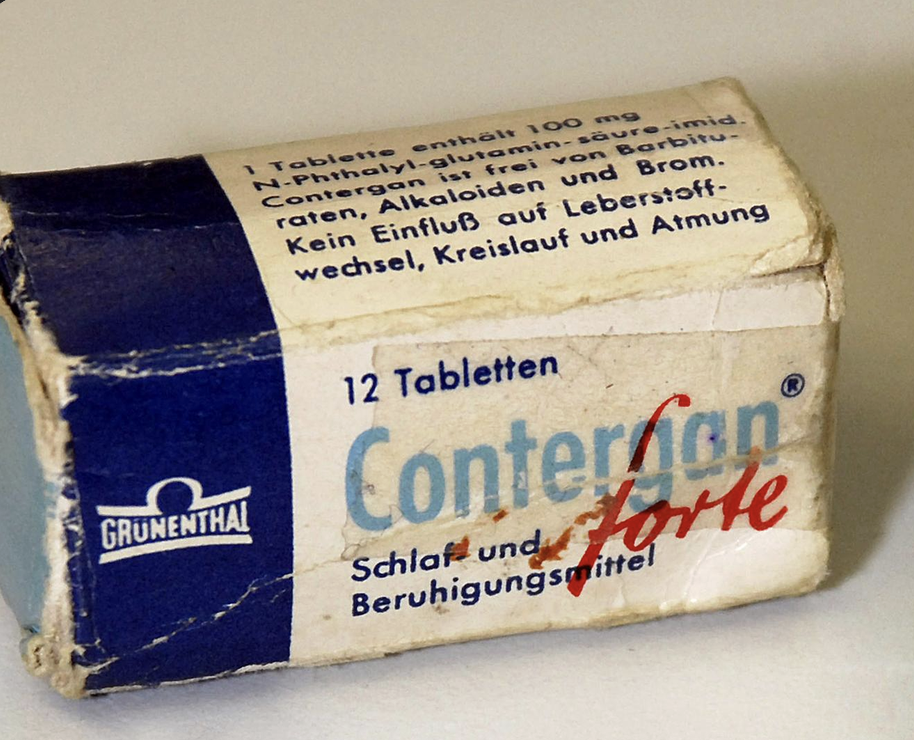
11 Oct 2026
The 2026 Nobel Prize for Chemistry
The Nobel prize for Chemistry this year celebrates the pioneering work of Henri Kagan and Kenso Soai on homochirality - the synthesis of just the required enantiomer of chiral compounds and not the mirror...
11 Sep 2026
The importance of using clear English in IB chemistry
Why using clear English is important when communicating in chemistry. This blog gives examples of two past IB questions where the language used to phrase the questions can lead to different interpretations...
Recommendations
See all"This has been a survival guide and good inspiration for lessons."
Magdalena Tsavkova
Vienna International School
"InThinking has proved to be a great boon for me, as a teacher and my students. The simplification of language, do's and dont's, worksheets with superb questions: appropraite videos/slides; exhaustive guidance on IA as well as EE... you name it !!! Thanks..."
Shalini Sharma
Good Shepherd International School
Subscriber comments
-
Hello Harprit, R2.3.4 gives X(g) ⇌ X(aq) as an example so I guess students could be asked to explain why a bottle of carbonated water fizzes when the top is removed from the bottle and then eventually goes flat if the top is left off.
R2.3 The extent of chemical change -
Hello Geoff, In R2.3.4, the IB guide talks about Le Chatelier's Principle to physical equilibria and gives a (g) / (aq) as an example. A very old IB question came up looking at a (l) / (g), and what happens when you increase the volume of liquid....
R2.3 The extent of chemical change -
Me too! As far as I know, there are no other issues with sodium hydroxide in the burette. My students frequently do it that way round. We just make sure that we don't leave the sodium hydroxide in the burette, and we rinse it out afterwards. The etching...
Acid-alkali titration
Mini
Hello, A student of mine is considering as a possible idea for her EE: a study of the effect of varying D-glucose concentrations on the intial reaction rate and peak absorbance of hemoglobin -catalysed phenolphthalein- hydrogen peroxide oxidation,...
Resources