TRUST: a key attribute of effective teams
Trust is a fundamental ingredient of effective teams
“Without trust, people are reluctant to put themselves out there. If they do, they’re vulnerable. Which means they could be dismissed or judged. Conversely, employees who trust their colleagues and leadership are more likely to be open, honest, empathetic, collaborative, and constructive. All of which boosts innovation and productivity.” (Hannah Price)
(Image source: Trust Faith - Free photo on Pixabay )
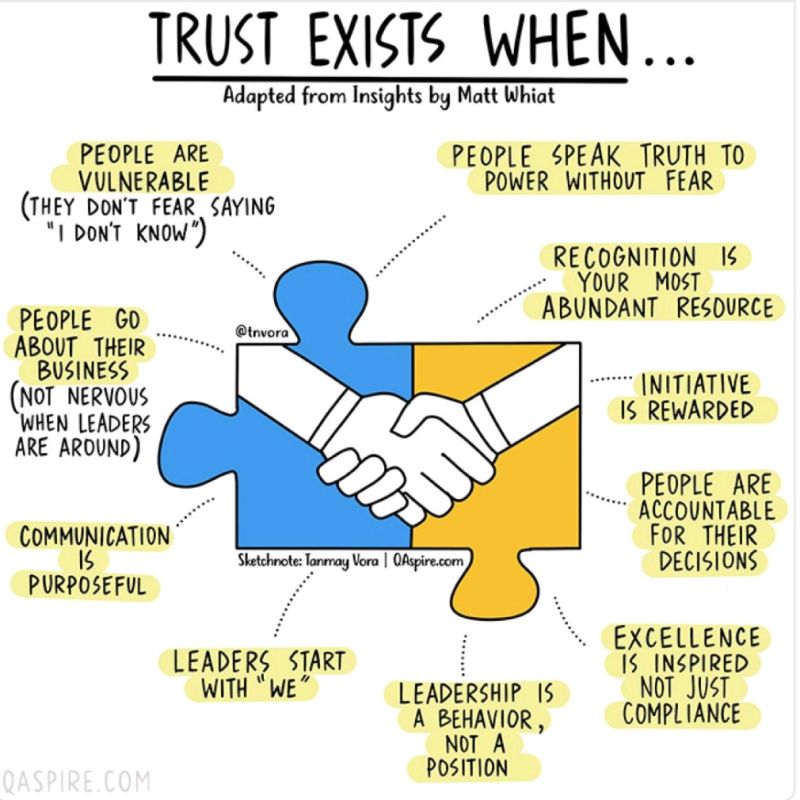
Trust is multi-faceted. It is PRACTICAL (you can be trusted to get things done). It is also EMOTIONAL (people know you are on their side, will respect them and treat them well). Both are essential to effective teams.
This is a good opening exercise with your team.
This activator encourages you to think about the meaning of 'trust' from different perspectives.
Individually think about the last time you had to trust someone:
- What does it mean to trust someone? (include what it feels like/sounds like/looks like)
- To what extent is trust at the heart of relationships?
Read the following. Identify key words | phrases.
Why does it take so long to initiate a PLC? One answer can be found in the increasingly robust research suggesting that trust is an element of organizational culture that is both critical and routinely overlooked - probably because administrators don't really want to face the music. Trust is the basis for “taken for granted” aspects of social interaction, a necessary ingredient for cooperative action, and a foundation for social capital (Coleman, 1988; Zucker, 1986), but the “problem of trust” is evident in educational settings. Many schools have weak levels of relational trust among the adults who work in and with them, even when there are pockets of high relational trust in small groups of like-minded teachers (Goddard, Tschannen-Moran, & Hoy, 2001). Trust is associated with higher levels of performance on such varied measures such as student achievement and parent collaboration (Hoy & Tschannen-Moran, 1999). Conversely, low trust is associated with teacher burnout. (Friedman, 1991) ~ Karen Seashore Louis
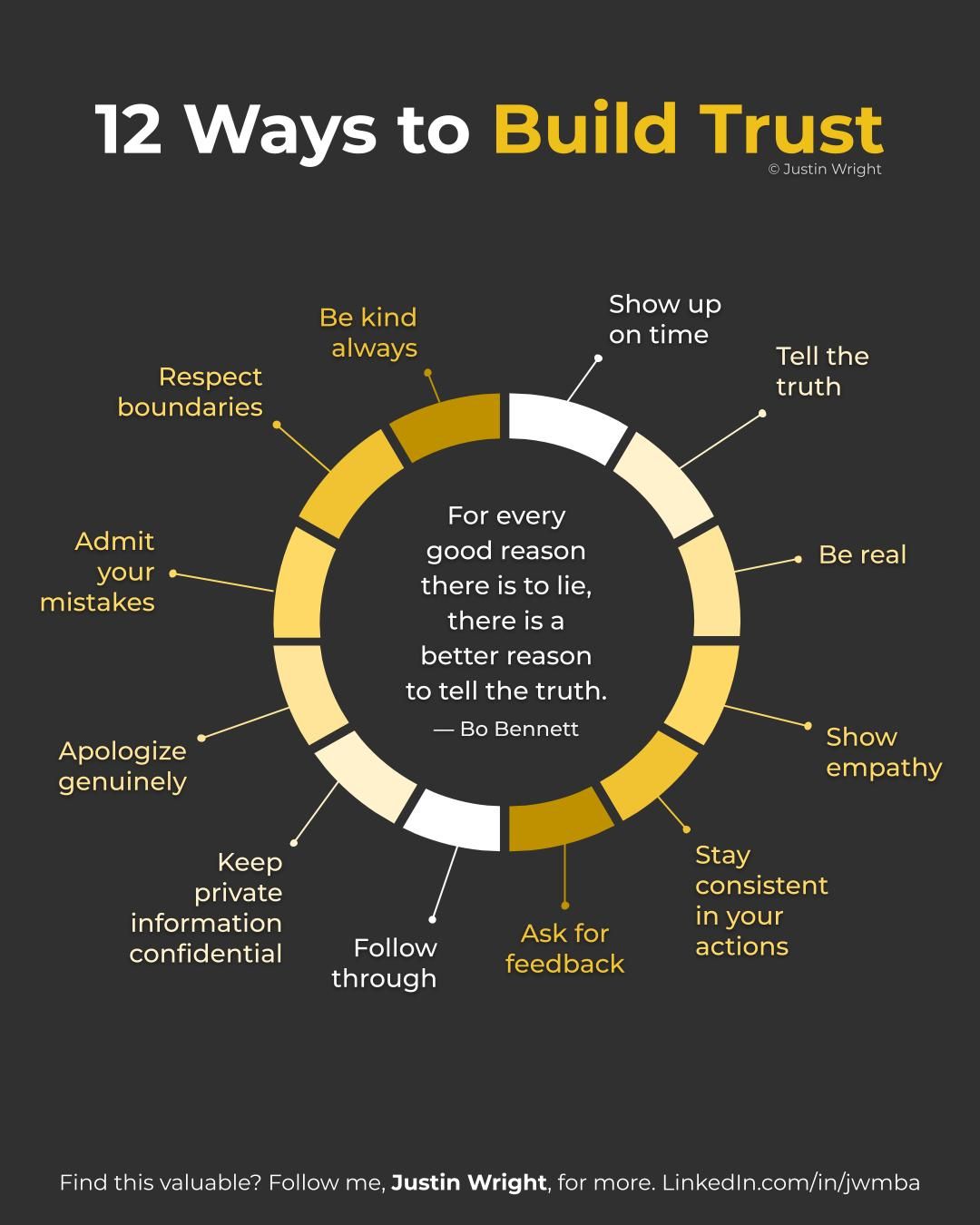
Hannah Price provides 12 simple but actionable tips for you to build trust at work
Credibility
- Tell the truth
- Admit when you don’t know something
- Admit when you’re wrong
Reliability
- If you say you’ll do it, do it
- If you’re meant to do it, do it
- Explain your thought process
Intimacy
- Extend trust to others
- Include others
- Watch your reactions
Self orientation
- Give others a chance to talk
- Listen with intent
Take responsibility for failures
In his book, The Speed of Trust (2006), Stephen Covey identifies 13 behaviours that high-trust leaders consistently exhibit. It is his belief that these behaviours can be learned and then applied to build and maintain trust.
- Talk straight
- Show respect.
- Be transparent.
- Right wrongs.
- Show loyalty.
- Deliver results.
- Get better.
- Confront reality.
- State expectations.
- Be accountable.
- Listen first.
- Meet commitments.
- Extend trust.
Developing Trust
A group of IB school leaders during a workshop in Riga (June 2019) created the following TOP TIPS list on how to develop trust in teams. Why not create your own top tips list with middle | section leaders in your school?

Be transparent (e.g. how you choose people for positions | how timetable was developed | expectations of team
Be consistent: expectations | follow through commitments | systems and procedures (e.g. class observations | learning walks – how do you do them? With whom? For what purpose? etc)
Be equitable: distribution of tasks and responsibilities e.g. assigning break and lunchtime duties
Be open-minded: give others a voice | listen to others | facilitate sharing of ideas and decisions | open-door policy (teamwork is a two-way process) | don’t be afraid to admit when things go wrong
Be proactive, not reactive: take initiative | be solution-focused | plan, strategize and reflect before acting
Be positive: look for strengths and positives | share evidence – be research-led, focus on facts not hearsay
Be connected: know stakeholder views (parents, students, governors) | communicate clearly
Be principled: take responsibility for your decisions | have integrity | be reliable | have empathy
Resources
Excellent website on growing trust: click HERE.
Simon Sinek’s book Leaders Eat Last argues that great leadership is about putting people first by creating a culture of trust and psychological safety where teams feel protected, valued, and motivated to collaborate and perform at their best. 1min1book is an online learning platform that provides very short summaries of books, typically designed to be read or watched in about one minute. Click HERE to find the summary of Simon Sinek’s book.
Caroline Sherwood, Essential. Powerful. Fragile: How to build trust in your school, SecEd, 20 October 2021
The 3 elements of trust, Jack Zenger and Joseph Folkman, HBR, February 05, 2019
Top 10 reasons why relationship building is important in leadership, by Hidayat Rizvi: Effective leadership goes beyond making decisions and formulating strategies; it encompasses the interpersonal aspect of business, particularly the art of building relationships. This piece explores the significance of relationship building in leadership, emphasizing its extensive impact on different facets of organizational achievement. Leaders who prioritize building relationships contribute to the establishment of trust, the cultivation of a robust organizational culture, and the promotion of sustainable success. Such leaders lay the foundation for improved team dynamics, enhanced communication, and heightened innovation within the organization.